


Every revenue operations leader eventually faces the same fork in the road. You can hand your lead generation to an outside expert and buy proven experience, or you can keep the work in-house and hold onto control and capability.
JMS Elite sits firmly on the expertise side of that fork, and they have earned it. Their experienced callers have spent more than two decades running human-led, deeply qualified appointment settings for complex B2B sales. The expertise is real.
But expertise is only one side of the ledger. The other side is in-house pipeline control: the visibility, the ownership, and the internal skill your own team keeps or gives up depending on which path you choose.
That is the tradeoff I want to unpack, because it rarely gets the attention it deserves, and it matters more the more your business depends on a predictable pipeline.
This is not a cost comparison. It is a control-and-capability comparison. By the end, you will see what you gain and what you quietly hand over when you delegate growth to an agency, and why an AI platform your team runs changes that math. Our B2B Rocket vs. JMS Elite ROI comparison covers the cost angle separately.
Let me be precise here, because it is easy to overstate. A good agency like JMS Elite is not hiding anything. They report on progress and hand over qualified, scored leads. The issue is subtler than secrecy.
It is that the actual work, the daily targeting, the messaging, the conversations, happens inside the vendor's process, not inside a system your team operates.

For a modern RevOps team, that creates a visibility gap. You see summaries and outcomes, but you do not own the granular, real-time view of every touch as it happens. When marketing, sales, and RevOps all want to read from the same live pipeline, having part of that pipeline running outside your walls makes a unified picture harder to assemble.
The tradeoff is well documented: outsourcing tends to buy speed and expertise while trading away control and long-term institutional knowledge. None of that makes delegation wrong. It just means visibility is something you partly give up.
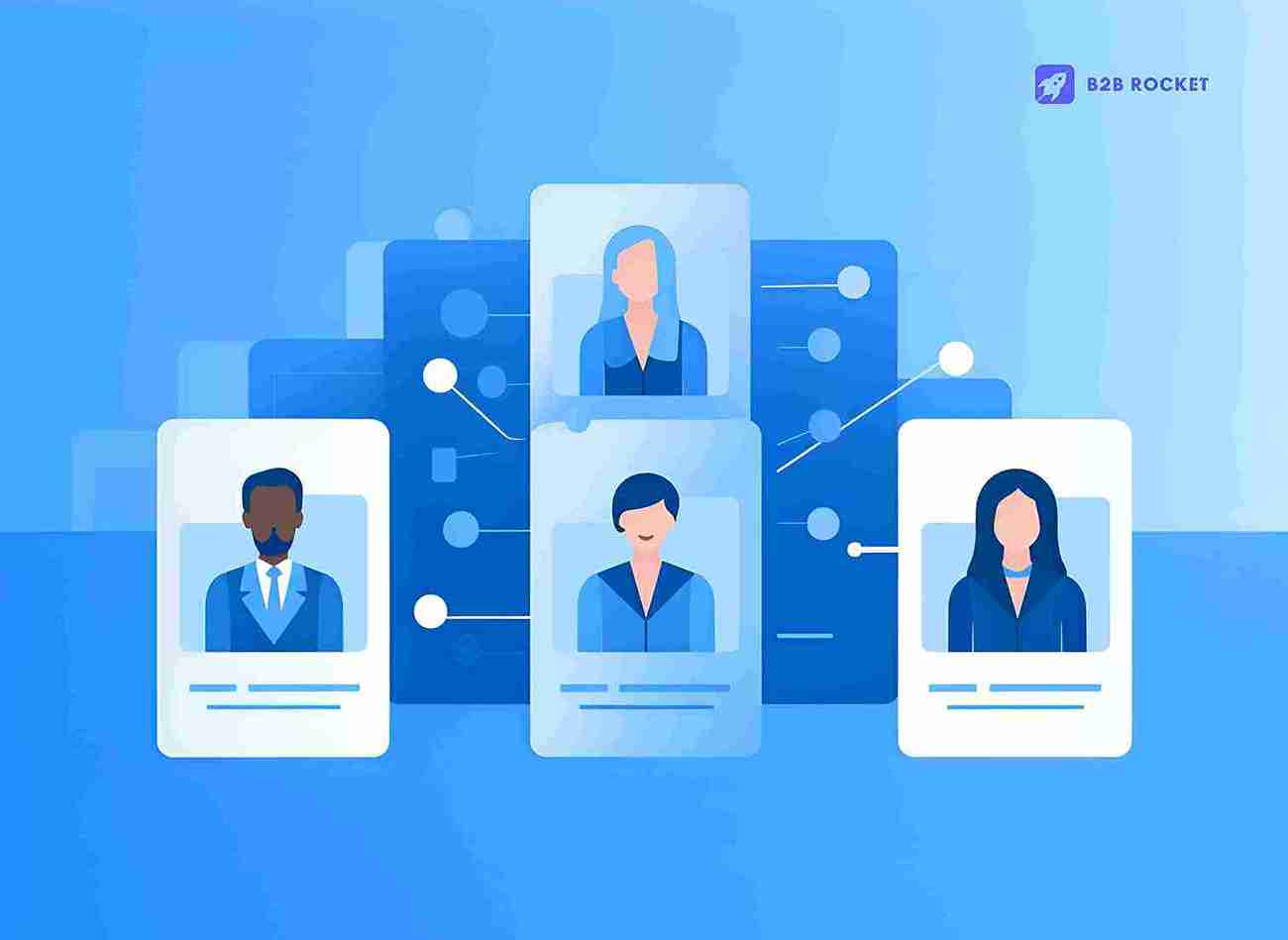
An owned platform closes that gap by design. Instead of waiting for an update, your team watches the whole pipeline on one screen and steers it in real time. You set the targeting, launch campaigns, read the analytics, and adjust on the spot, all from a system you control.
That is what in-house pipeline control actually feels like day to day. Our AI-powered CRM keeps leads, outreach, and follow-up in one place, and real-time intent data shows your team who is ready to buy right now, so nobody is guessing or waiting.
One B2B Rocket user, Eurie Jay P., described the dashboard as clean and intuitive and found managing several AI agents from one place simple and hassle-free. When the data and the controls sit with your own team, transparency stops being a report you request and becomes the default state of your pipeline.
Here is the part that gets overlooked, and it is the one I would weigh most heavily. When you outsource prospecting, the skill of prospecting lives with the vendor, not with your team. Their callers get better at finding and qualifying your buyers. Your own people do not, because they are not the ones doing the work.
Over time, that has a cost you cannot see on an invoice. Industry analysis of the build-versus-buy decision is candid about it: outsourcing buys speed, but in-house development keeps data ownership and grows reps who become your future account executives, and the core tradeoff is control and cultural depth versus speed and flexibility.
An AI platform offers a third path. Your own SDRs run the engine, learn from its data, and build real prospecting capability, while the platform handles the heavy lifting. Instead of renting expertise, you are compounding your own.
If you are still deciding whether outsourcing fits your stage, our guide to SDR outsourcing and our sales development tools are good places to think it through.
For a long time, the choice looked binary: build a team slowly and expensively, or delegate to an agency and give up control. An AI platform breaks that binary. It gives you integrated, real-time reporting and the ability to build internal capability at the same time, in one system your team owns.
That is what future-proofing a growth engine looks like. The reporting is live and yours, the controls sit with your people, and the capability stays in-house as you scale. With AI agents doing the repetitive execution, your team focuses on strategy and the highest-value conversations.
One B2B Rocket user, Arjumand, credited our data-driven approach and easy-to-use interface for managing the funnel with a clear rise in conversion rates and revenue. That is control and capability compounding together, rather than one being traded for the other.
So how should you choose? I keep the framework simple.
Lean on an agency like JMS Elite when you need seasoned expertise fast, when your sales are complex enough to demand skilled human conversations, and when building internal capability is not a near-term priority. That is a legitimate, sometimes ideal choice.
Choose an owned AI platform when pipeline transparency, real-time control, and building lasting in-house capability are what you are optimizing for. For RevOps teams that want to own their pipeline and grow their people at the same time, empowerment beats delegation.

If I boil this down, the real question is not whether JMS Elite is good, because they are. It is what you are willing to trade for that expertise. Delegating growth means handing over visibility, control, and the chance to build lasting capability inside your own team. For some companies, at some stages, that trade is worth it. For a growing number, it is not.
That is why we built B2B Rocket. Our AI agents put the pipeline, the dashboard, and the day-to-day controls directly in your team's hands, so you get real-time transparency and build in-house capability at the same time, without giving either away.
If you would rather own your pipeline than outsource it, this is the model built for it. Take the controls and see how much your team can do.
Not entirely, but partly. A good agency reports on results and delivers qualified leads. What you give up is native, real-time visibility into every touch, because the work runs inside the vendor's process rather than a system your team operates. For RevOps teams that want one live source of truth, that gap matters.
Used well, it upskills them. The platform handles repetitive execution while your SDRs run campaigns, learn from the data, and sharpen their prospecting and strategy. Instead of that expertise living with an outside vendor, it builds inside your own team, which pays off as those reps grow into more senior roles.
It depends on your sales motion. For complex, high-touch deals, seasoned human callers still bring real value. For scalable, transparent, in-house-controlled pipeline building, a platform is often the stronger fit. Plenty of teams blend the two, using AI to own and scale while reserving human expertise for the most complex work.
Book more deals and drive revenue on autopilot with Al agents, real data, and multichannel outreach.

Work 24/7 to find, engage & qualify leads.

48+ contacts to reach the right people.
.svg)
Email, calls, Linkedin & more. All in one place.
Automate, optimize & close more deals.









.svg)
.svg)
.svg)
.svg)

